The story behind the second series
for Hand in Glove
Interview with Studiopepe
Interview with Studiopepe
Unstated
Studiopepe has reached twenty years of activity. Looking back, how did it come about and how has it evolved over time?
Studiopepe was born as a dialogue, even before it became a studio. A continuous exchange between different yet kindred sensibilities, which over time transformed into a recognisable language. The evolution has not been linear, but built up in layers: from interior to product design, from material experimentation to the crafting of atmospheres. We have learned to work by subtraction as much as by addition. What we are today is the result of everything we chose not to do, as much as everything we did.
Veragouth and Xilema, Bedano, Switzerland 2026
Photo: Nicolas Polli
Veragouth and Xilema, Bedano, Switzerland 2026
Photo: Nicolas Polli
U
In what way has Milan, the city of Italian design, shaped and influenced your work?
Milan is a constant tension between rigour and freedom. It is a city that demands you move fast, yet also offers you the opportunity to observe, absorb and rework. Its rhythm, its understated elegance and its capacity to embrace different languages have deeply influenced the way we design. It gave us access to a unique ecosystem – of craftspeople, manufacturers, and creative minds – that made what we do possible.
Veragouth and Xilema, Bedano, Switzerland 2026
Photo: Nicolas Polli
U
How have your personal cultural influences contributed to Studiopepe's vision?
Our influences are wide-ranging: art, cinema, photography, travel, personal memory. Everything flows into a vision that is never one-dimensional. We are interested in working with contrasts and overlaps, allowing each project to become an open narrative, where suggestions interweave.
Veragouth and Xilema, Bedano, Switzerland 2026
Photo: Nicolas Polli
Veragouth and Xilema, Bedano, Switzerland 2026
Photo: Nicolas Polli
U
What are the cornerstones of your practice? Have they taken on different forms and expressions over time?
The tension between opposites has always been our territory: rigour and sensitivity, memory and contemporaneity. Material, colour, surface and narrative have always been central. Over time, however, they have transformed: today we work more through subtraction, seeking a more essential balance without losing depth. The work has become quieter, but perhaps more intense.
Veragouth and Xilema, Bedano, Switzerland 2026
Photo: Nicolas Polli
U
Where do you look for inspiration for your projects?
For us, inspiration often comes from adjacent disciplines — anthropology, the history of costume, contemporary art and, of course, travel. Inspiration is never found in a single place. It arrives from minimal details, a texture, a colour. It frequently emerges outside of design, in lateral territories that are then brought back into the project.
Veragouth and Xilema, Bedano, Switzerland 2026
Photo: Nicolas Polli
U
How do you keep pace in a fast-moving city like Milan? How do you stay relevant?
Rather than chasing speed, we try to build our own rhythm. Staying relevant means remaining true to an authentic form of research, avoiding the pull of ephemeral dynamics. Consistency, for us, is a form of resistance.
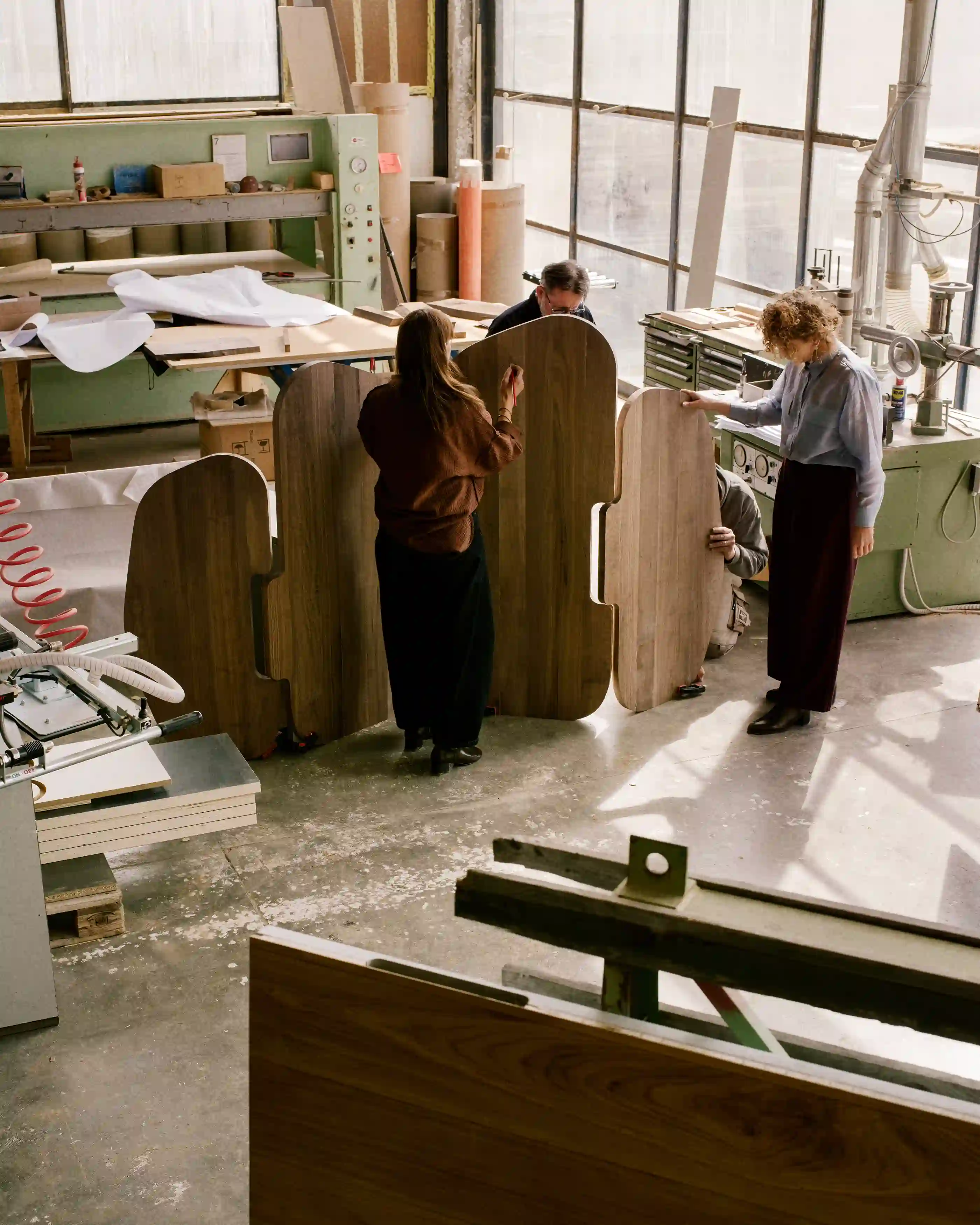
Veragouth and Xilema, Bedano, Switzerland 2026
Photo: Nicolas Polli
U
At what point are the materials of a product defined in your practice? Is the choice a starting point, or does it come later – and how does it affect the project?
It depends on the project, and this variability is part of the method. Sometimes it is the material itself that generates the project: its texture, its light, its physical behaviour become the trigger. It is an active presence, not a neutral one – it steers the project, shapes its gestures and proportions. We work by listening, allowing the material itself to suggest.
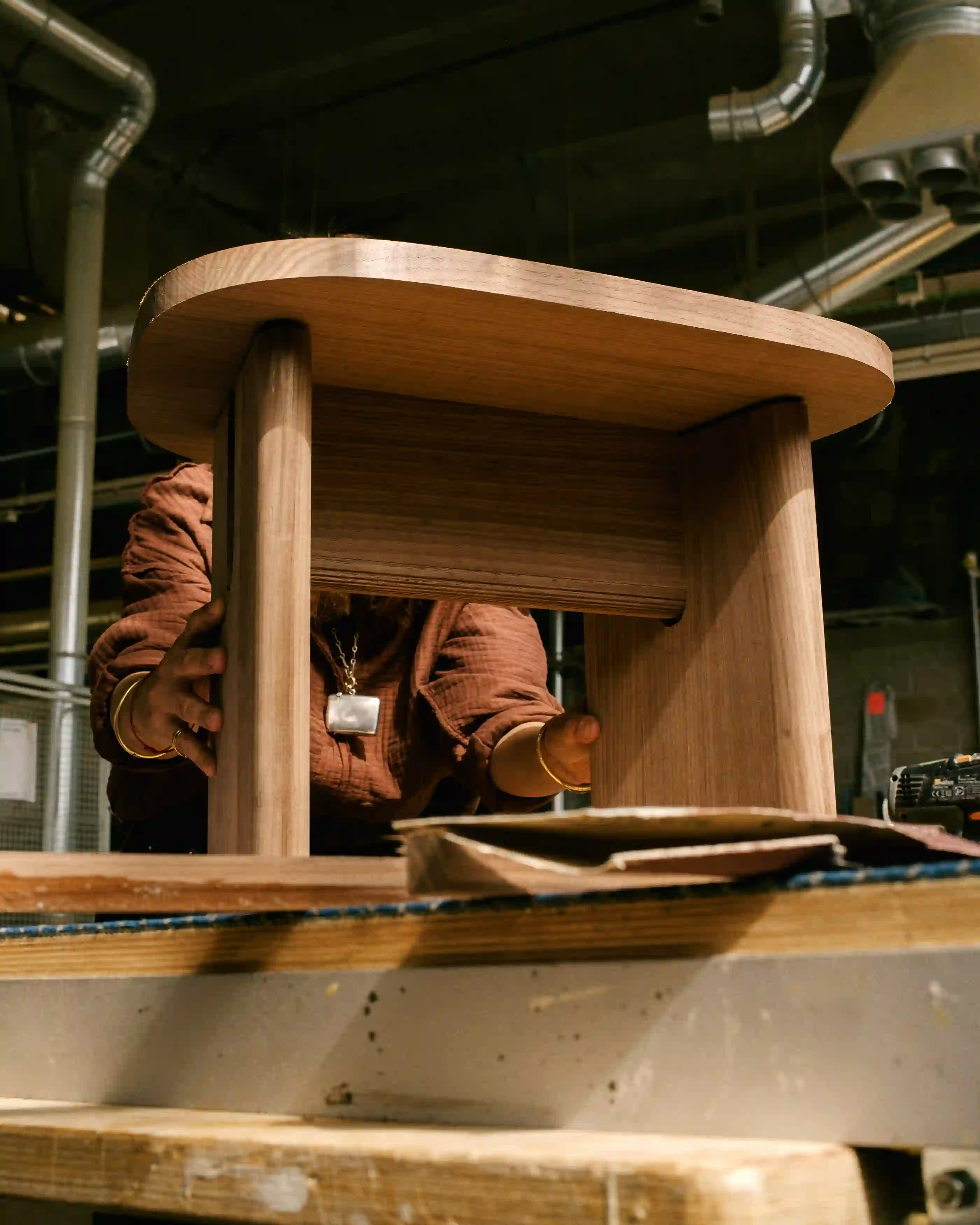
Veragouth and Xilema, Bedano, Switzerland 2026
Photo: Nicolas Polli
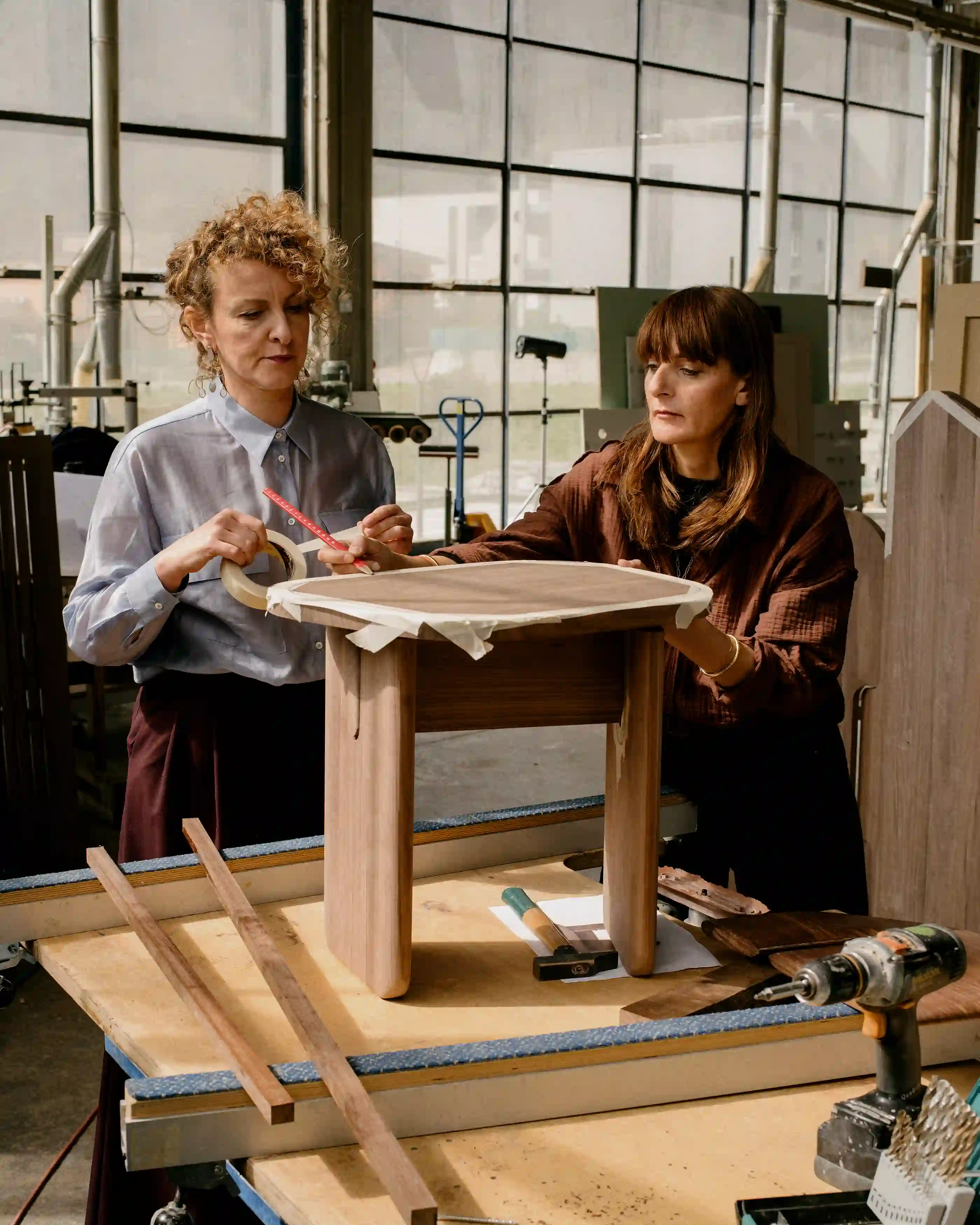
Veragouth and Xilema, Bedano, Switzerland 2026
Photo: Nicolas Polli
U
Wood as a material: what are its limits and the characteristics that shape the design process? In what types of projects do you use it?
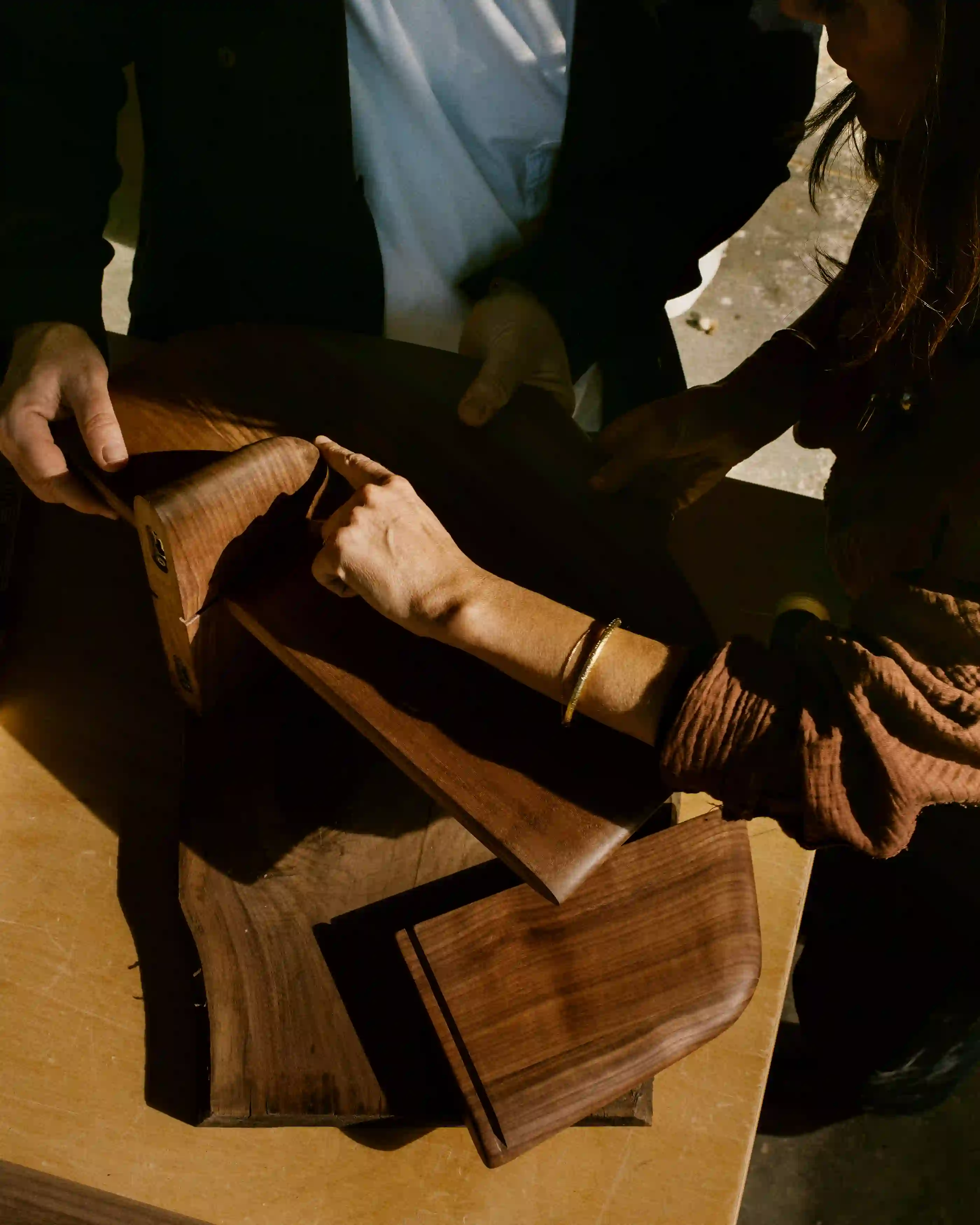
Wood is a living material, and as such it does not allow itself to be fully controlled. It has a direction, a memory, a response to time that you must respect or come to terms with. Its limitations are also its qualities: variation, imperfection, the way it ages. We use it when we want an object to have warmth without sentimentality, presence without heaviness. It is a material that demands design honesty. We reach for it when we want to introduce warmth and depth, often in dialogue with colder materials or in contexts with a more industrial aesthetic.
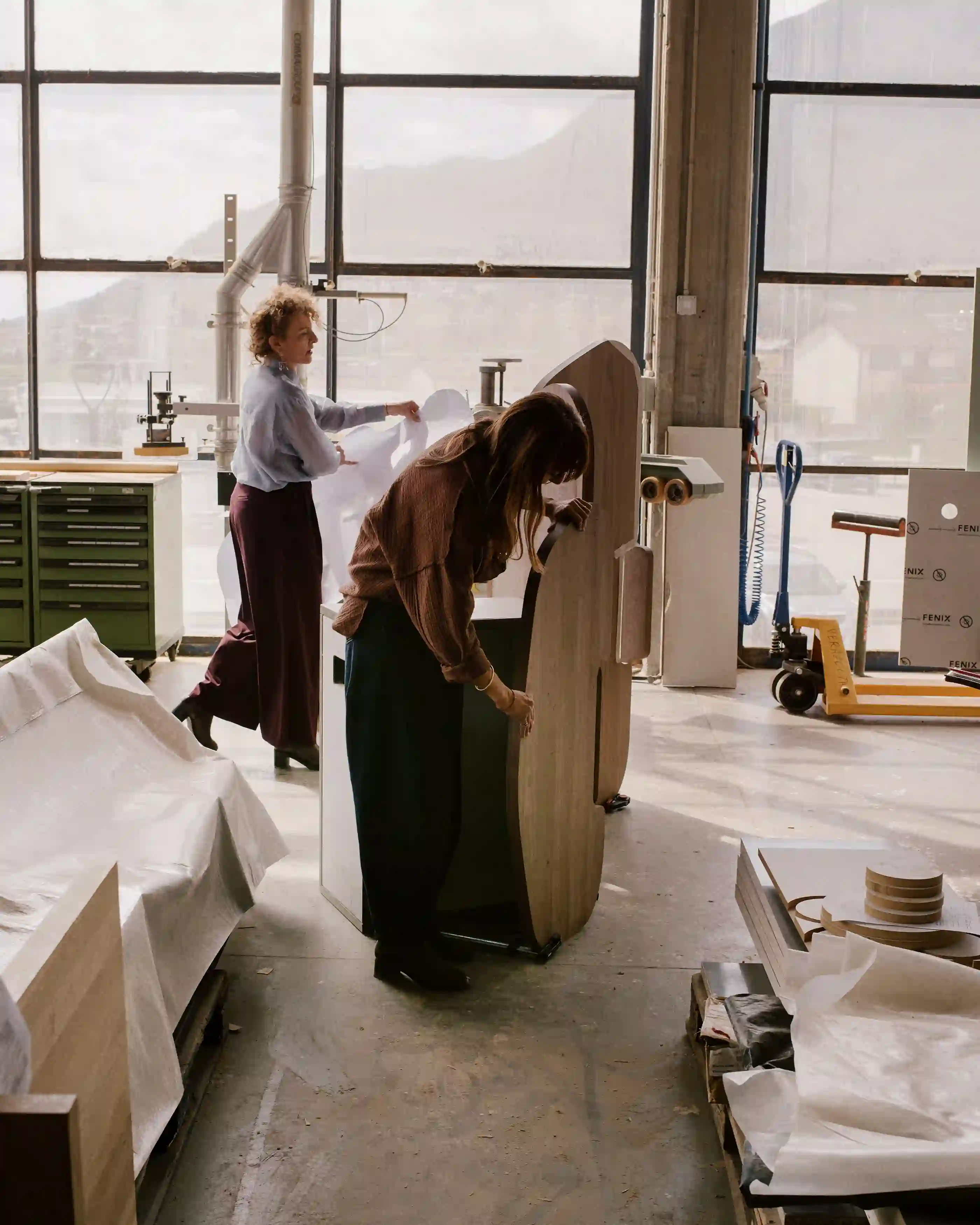
Veragouth and Xilema, Bedano, Switzerland 2026
Photo: Nicolas Polli
U
How did the creation of Jules, Jim and Jean-Luc come about? How do they coexist while maintaining their individuality? How is the design structured when creating a collection of objects?
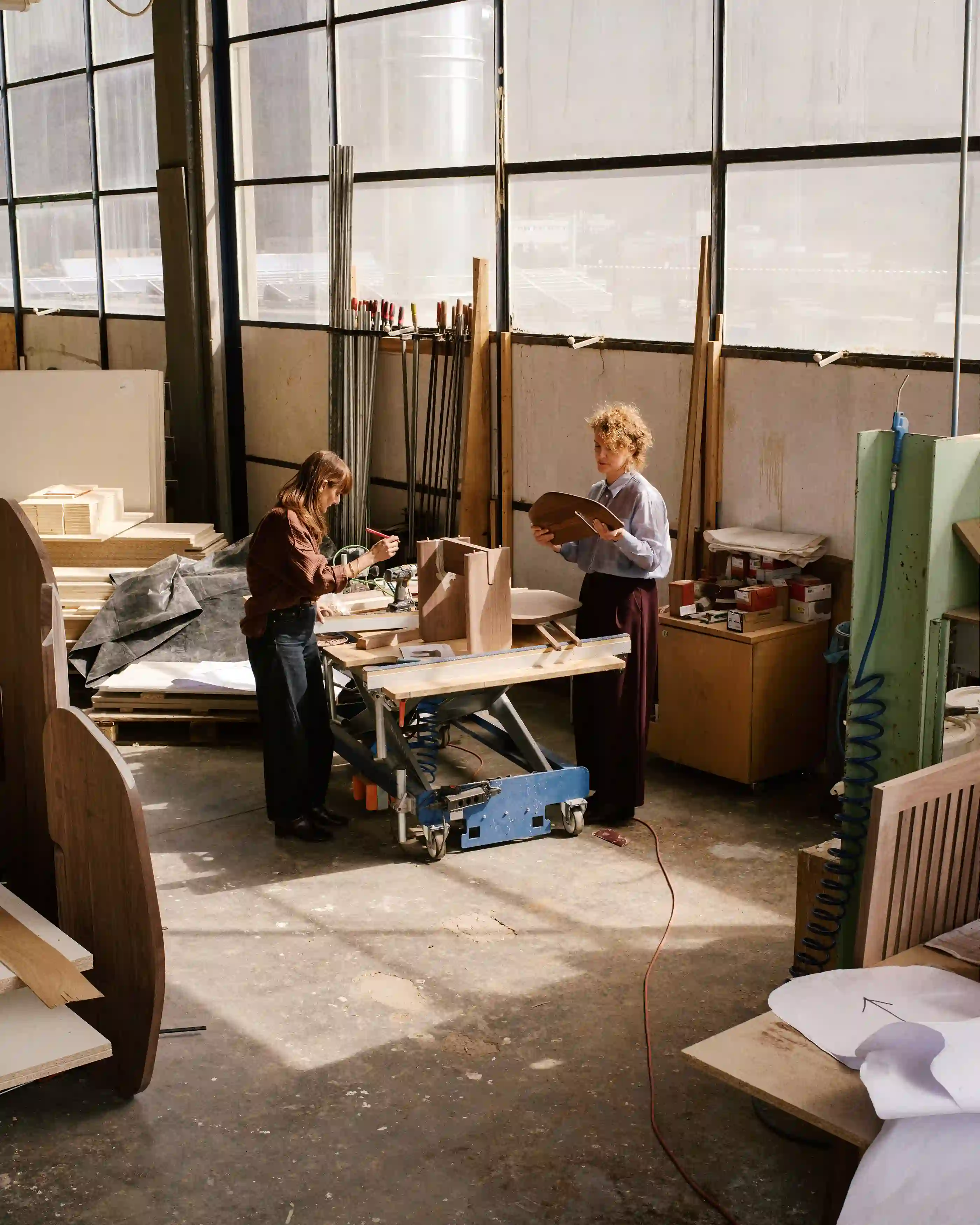
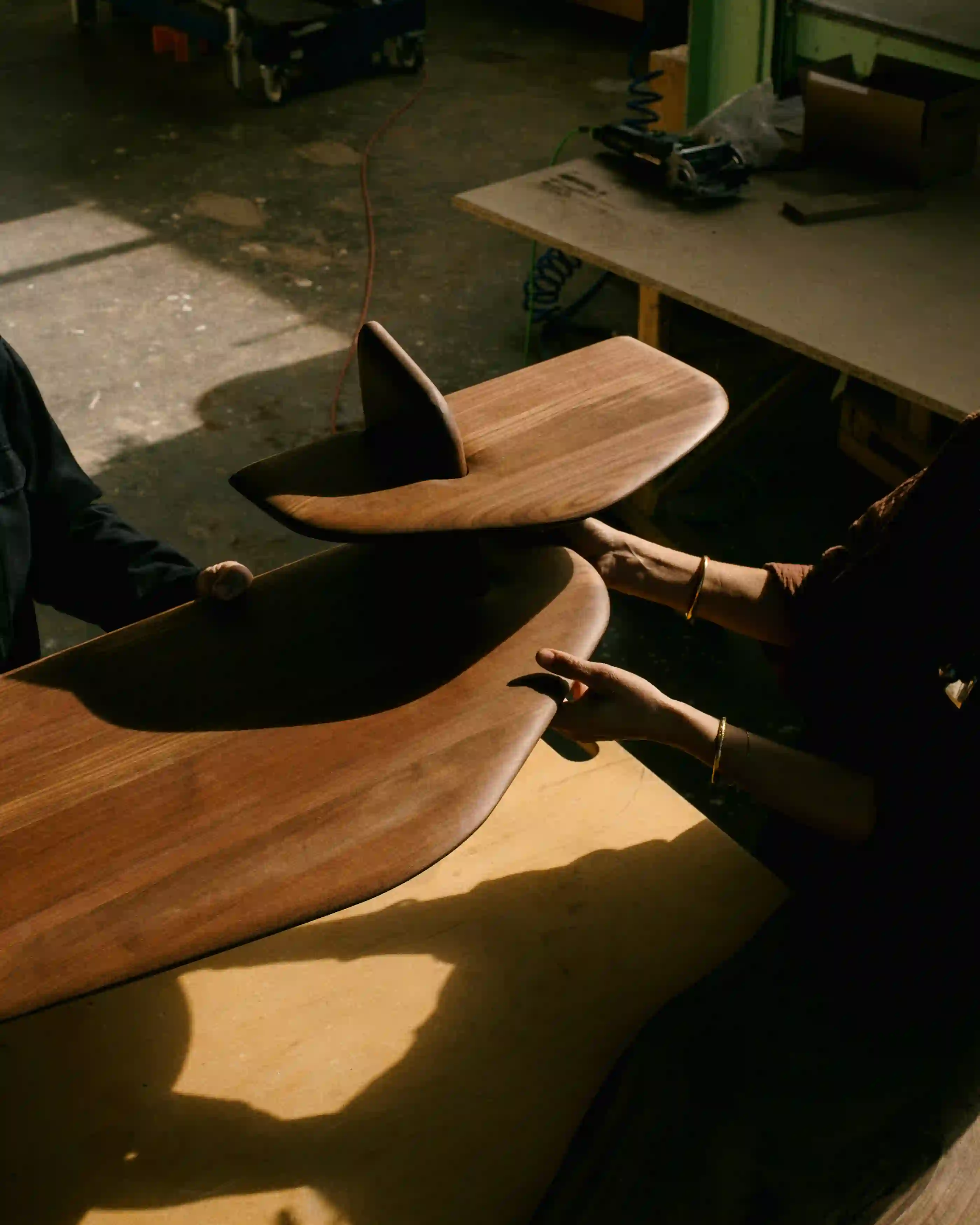
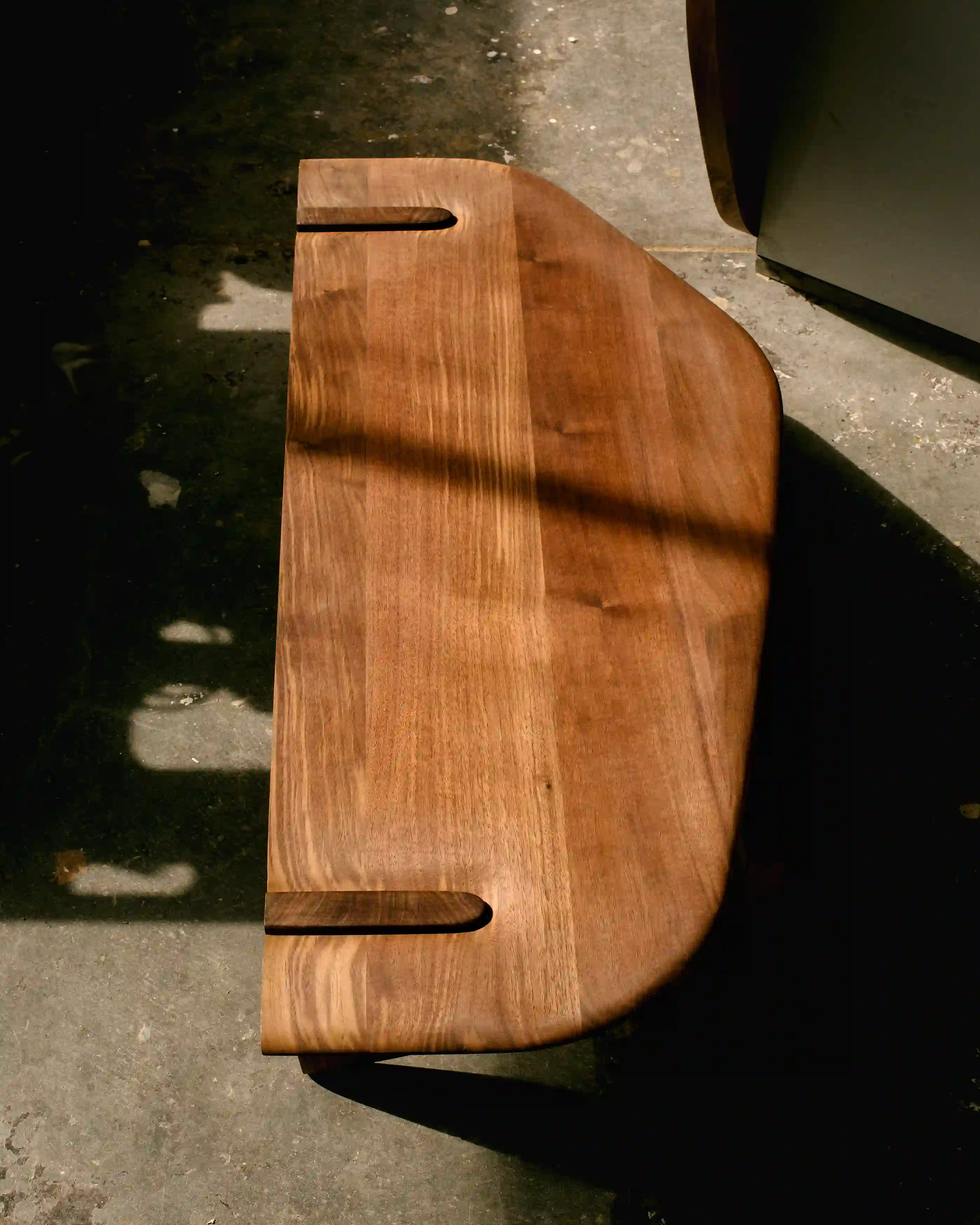
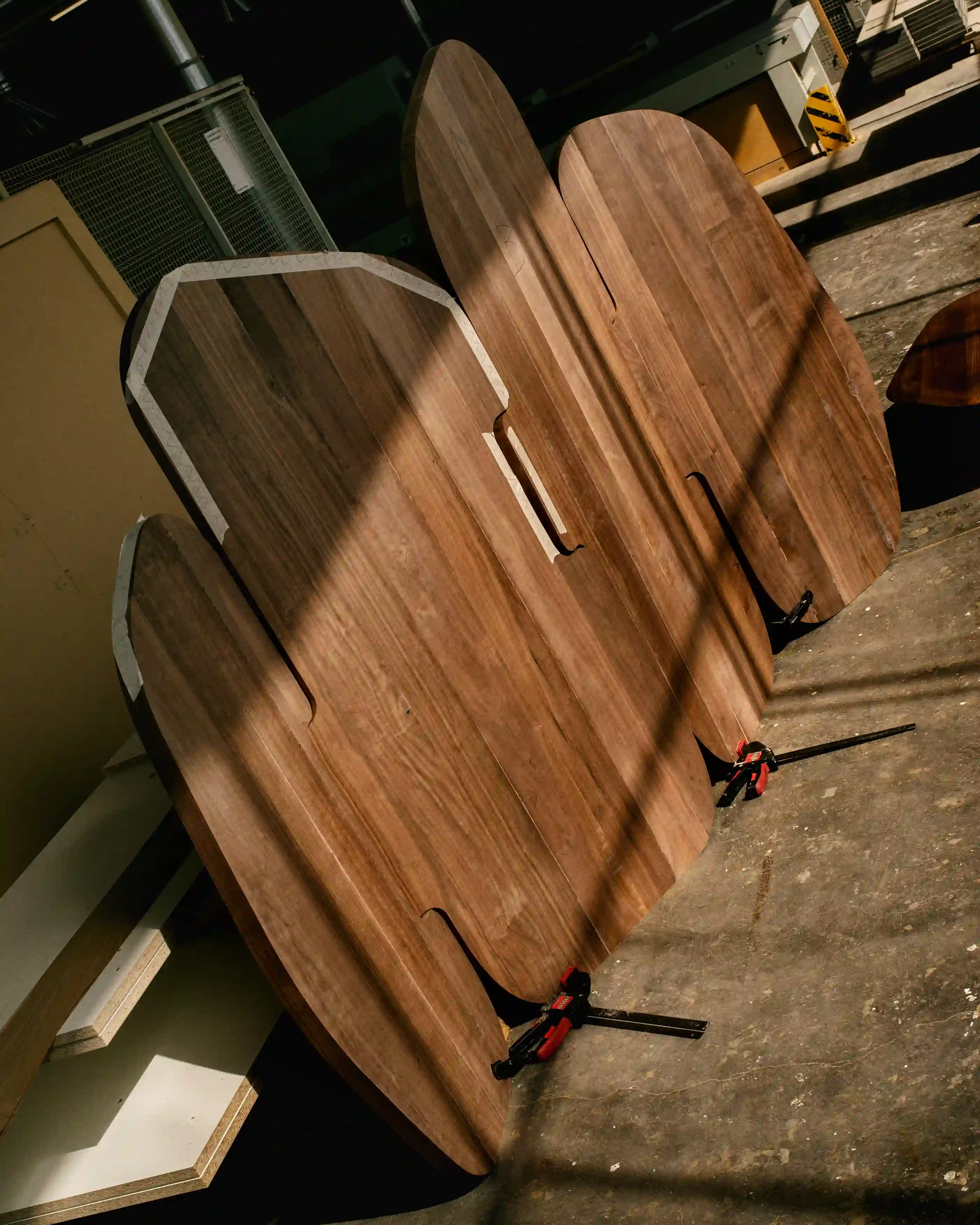
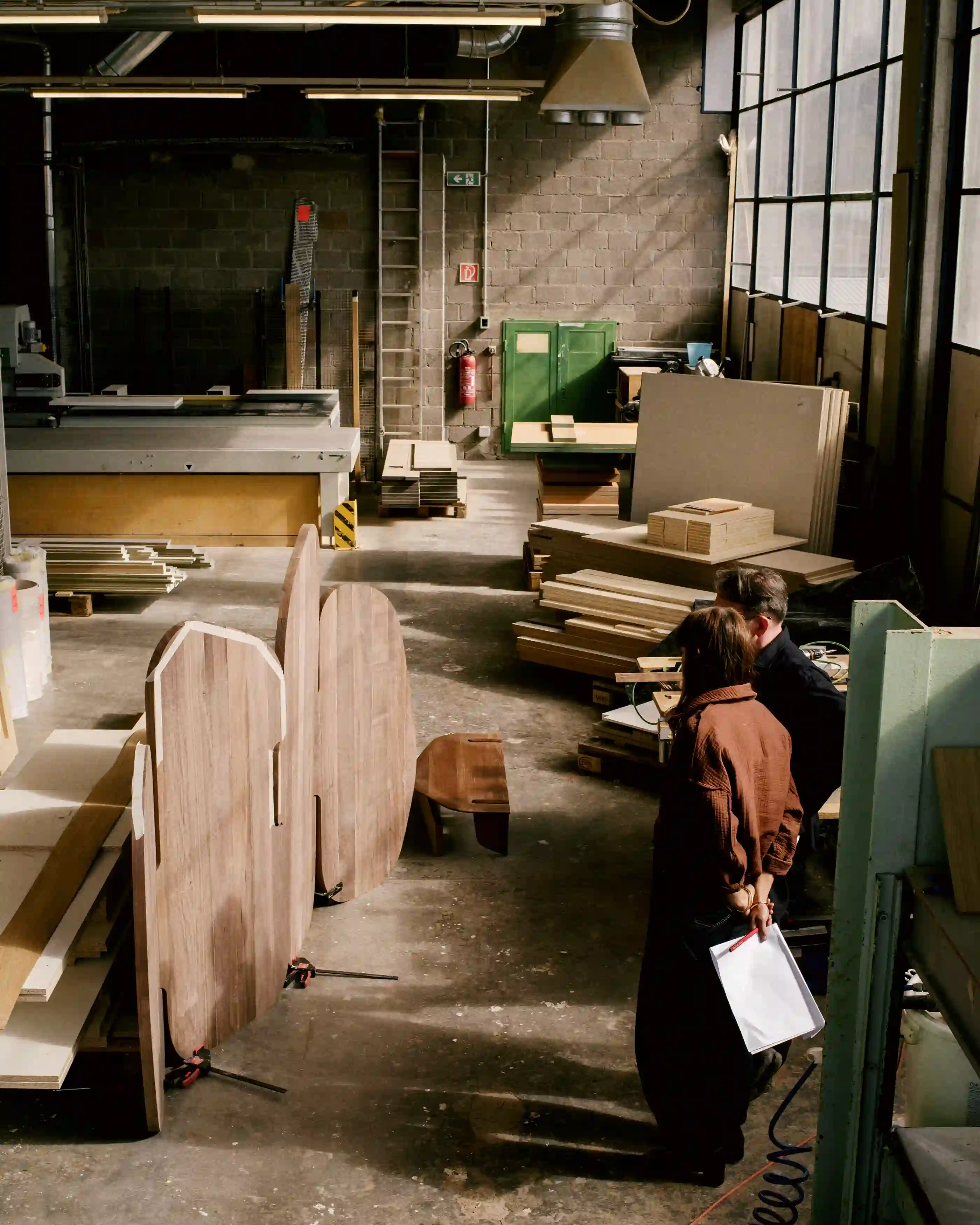
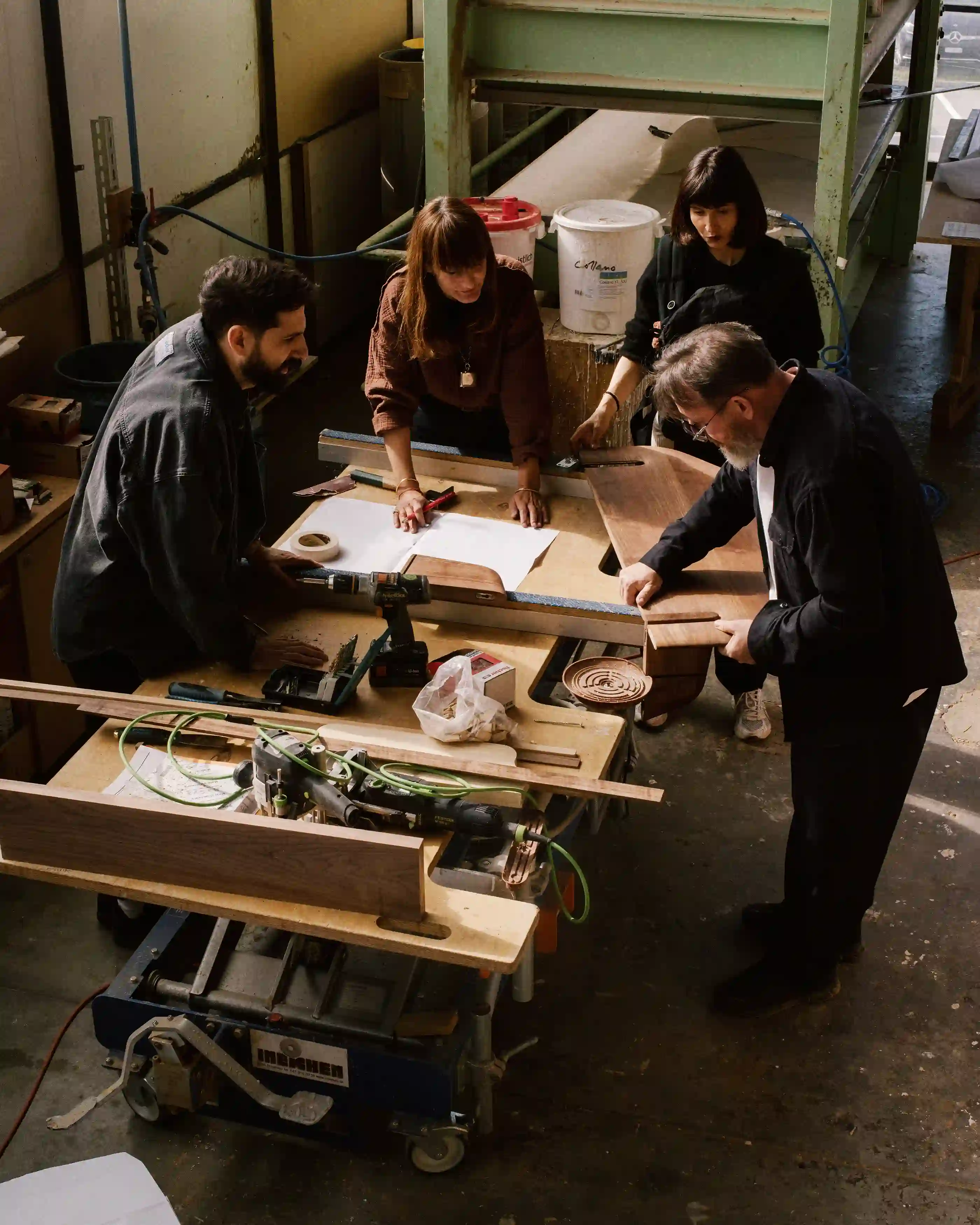
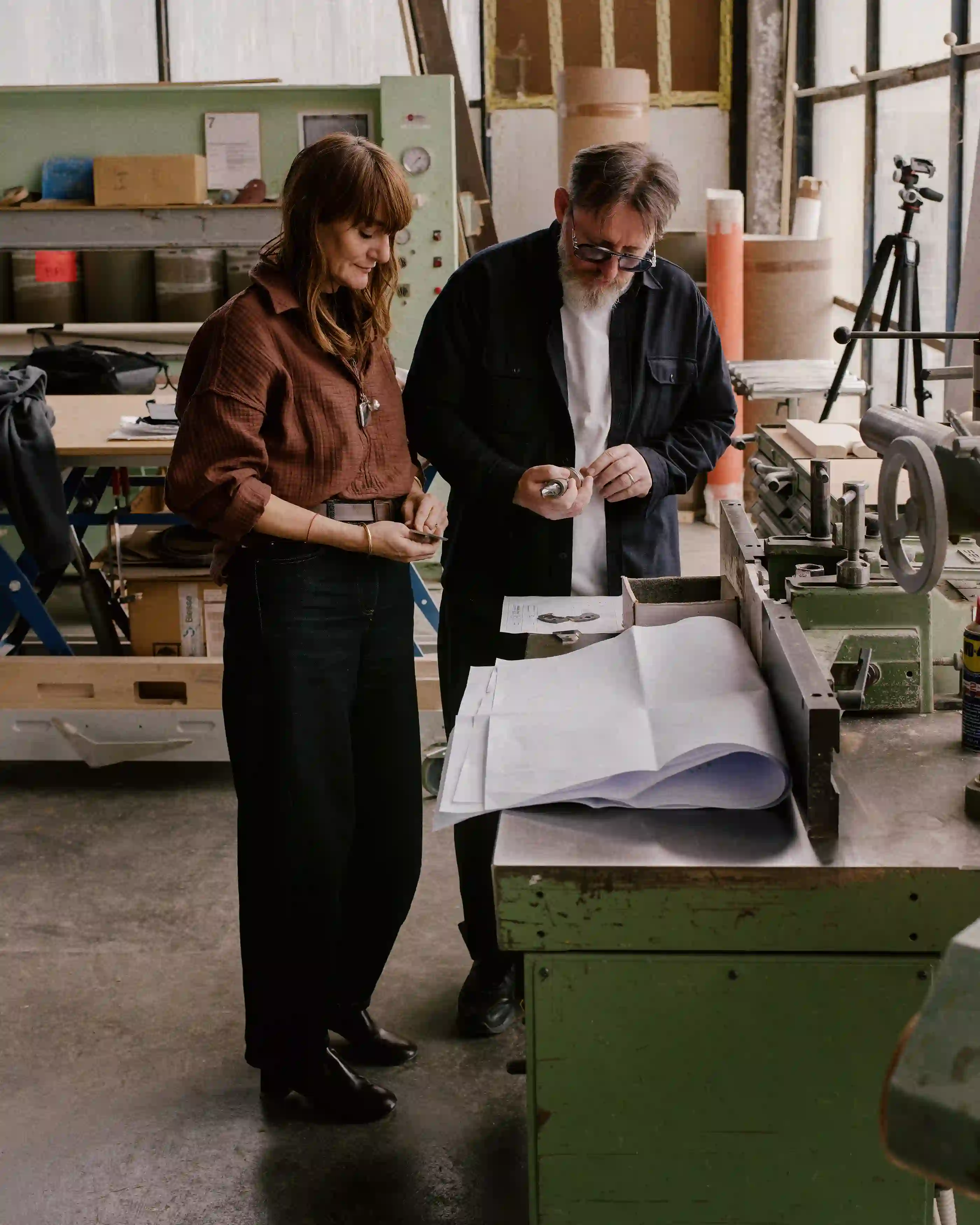
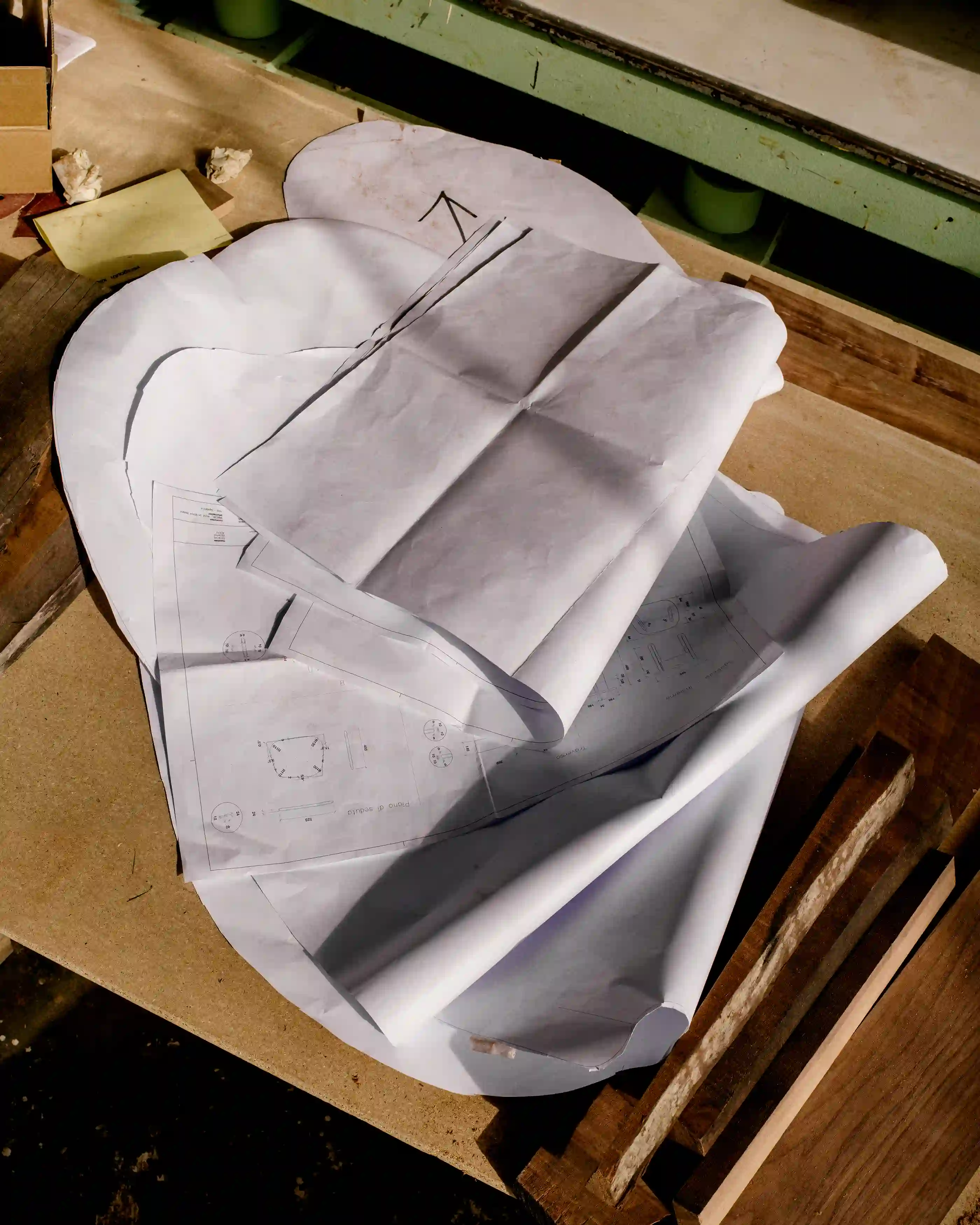
The idea was to create a place of quiet focus for writing within an existing environment – a small, versatile workstation that can be enriched over time with new modules, even positioned upside down. The high level of craftsmanship makes this possible: the underside is finished with the same care as the top, so that there is no distinction between the two. This way, the pieces can also be configured as a bookshelf system, creating free compositions within the space.
The collection is completed by a seat that echoes the same interlocking joint motif and rounded character. These are pieces born to be in pairs, as suggested by the name of a celebrated pair of friends from French cinema.
The room divider carries the same concept and the same poetic sensibility. Its name is a nod to Godard – alongside Truffaut, one of the defining directors of the Nouvelle Vague, a cinematic movement characterised by expressive immediacy, a contagious joie de vivre and the ability to adapt to circumstances – qualities that resonate throughout this collection.
Veragouth and Xilema, Bedano, Switzerland 2026
Photo: Nicolas Polli
Veragouth and Xilema, Bedano, Switzerland 2026
Photo: Nicolas Polli
U
In what ways does working with a Swiss company differ from your usual production process?
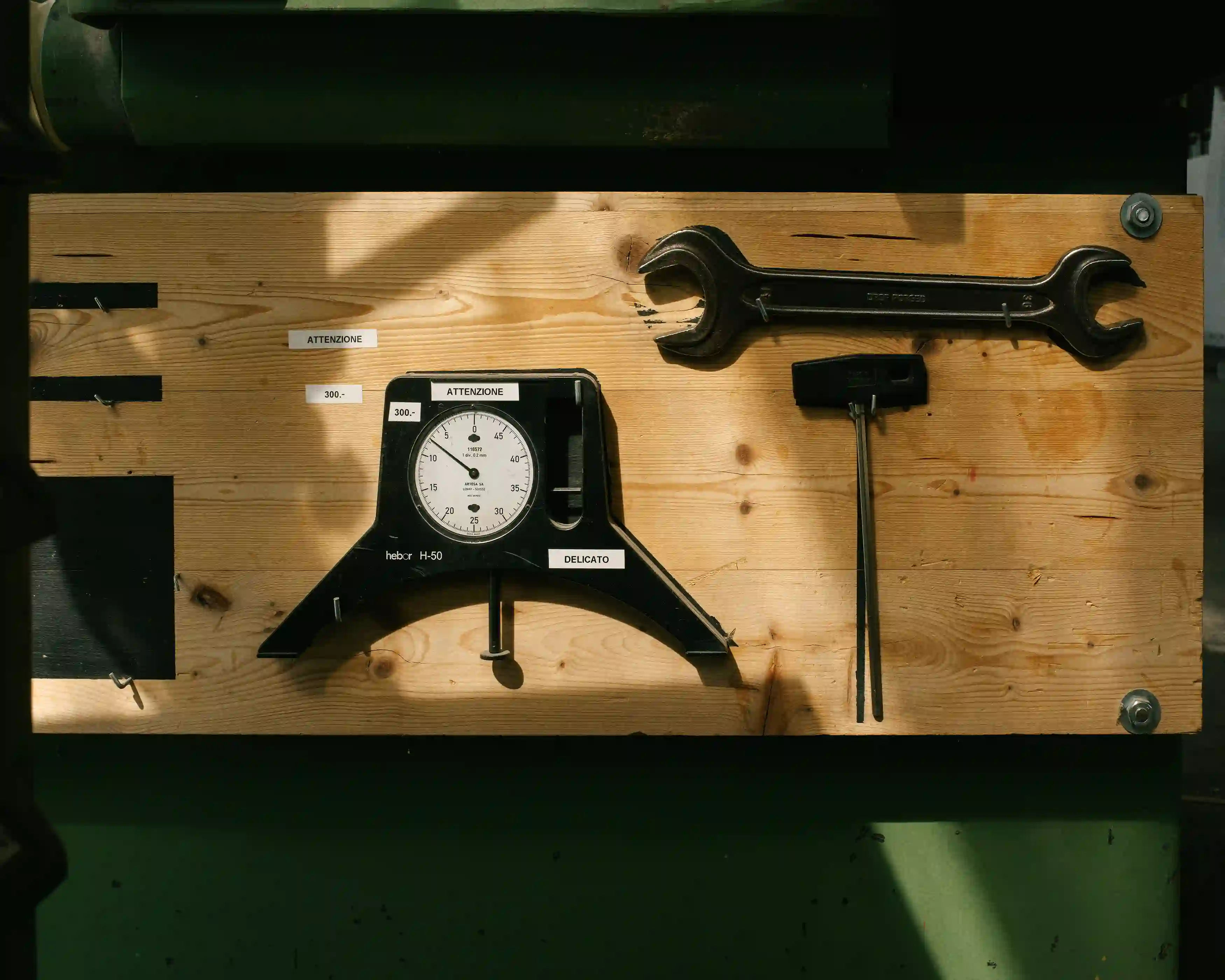
It was fascinating to work with Veragouth and Xilema for their approach – at once highly artisanal and remarkably organised, precise and codified, in ways we associate with Swiss qualities. We found parallels with the Brianza region, just a few kilometres away, where many of the companies that produce our projects are based and with which we work closely. Switzerland has a European sensibility that interests us – something like returning to Mitteleuropean roots that are kindred yet distinct from the more Mediterranean ones we perhaps know better.
U
Is there a book you would recommend to new or young designers for deepening their research and design development?
In Praise of Shadows by Tanizaki, which celebrates shadow and the patina of things – and, by extension, a "slow" approach that I find at odds with the contemporary world, but all the more precious for it. The time devoted to things matters, and it is a value in itself.
U
Which designers, Italian and otherwise, most influence your work?
Many Italian icons have inspired us and continue to do so – among them Bruno Munari, Ettore Sottsass, Carlo Scarpa, and in the visual arts, Giorgio Morandi for his use of light, and the Arte Povera movement for its conceptual approach and use of materials.
Veragouth and Xilema, Bedano, Switzerland 2026
Photo: Nicolas Polli
© Hand in Glove, 2026.
A project by Veragouth and Xilema and Unstated International